

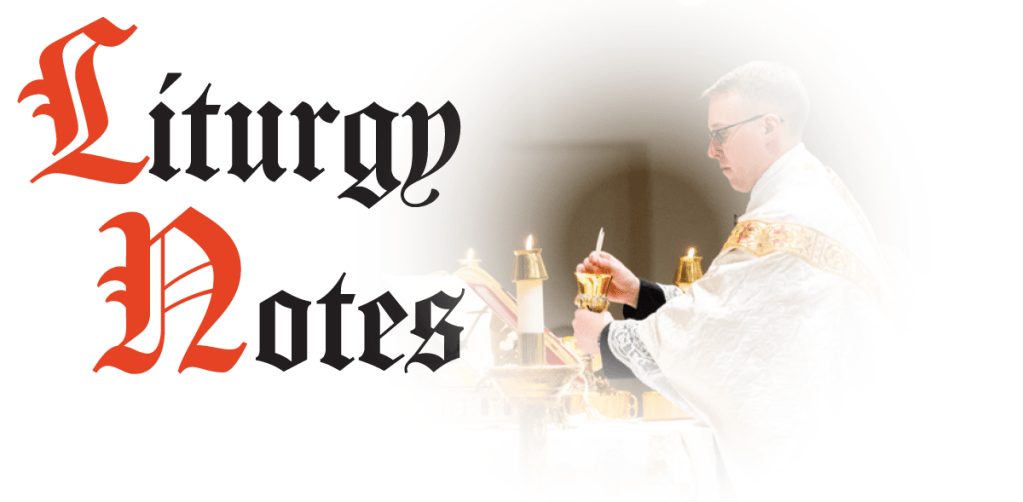
There is a trend in the Church, slow but significant, of incorporating more Latin into the celebration of Mass. At St. Mark, we have been in the process now for several years of introducing the Latin texts of various parts of Mass, chiefly in the “Ordinary” of Mass—those parts that do not change from week to week, like the Gloria, Sanctus, and Agnus Dei. Why have we been doing this? Is this just an aesthetic choice, or is there a deeper reason?
The short answer is that we incorporate Latin into our liturgies because the Church instructs us to do so. When debating the reform of the Mass, the bishops at Vatican II determined that while use of the vernacular may be suitable in certain instances, some Latin must be retained. In their document on the Sacred Liturgy, Sacrosanctum Concilium, the council fathers write:
In Masses which are celebrated with the people, a suitable place may be allotted to their mother tongue. This is to apply in the first place to the readings and “the common prayer,” but also, as local conditions may warrant, to those parts which pertain to the people… Nevertheless, steps should be taken so that the faithful may also be able to say or to sing together in Latin those parts of the Ordinary of the Mass which pertain to them (sec. 54) [emphasis added].
It’s clear that the Church did not intend to eliminate Latin, but only to make room for expanded use of the local language when called for by unique pastoral situations. Our practice at St. Mark fits squarely within these guidelines. Moreover, Latin is our heritage as Western Christians—a source of unity in the Church and a living bond with those who have gone before us.

 Truth & Beauty
Leave a comment