
-
A Closer Look at the Three Pillars of Lent
Last week, we looked at how the Church proposes the three “pillars of Lent” to shape our observance of this holy season. This week, we will examine each pillar more closely and consider simple ways we can incorporate them into our daily routine.
Prayer is simply talking with God. There are many ways to pray in our Catholic tradition, but they all come down to one thing: communing in our hearts and minds with the Lord who loves us and longs to spend time with us. Of course, the Holy Sacrifice of the Mass is the supreme for prayer for the Christian, but personal one-on-one time with the Lord is also vital. If you have not established a daily prayer routine of some kind, Lent is a great time to begin. If you are unsure of where to start, you might simply set aside some time each day—say, 15 minutes—to just sit and talk to the Lord in the quiet of your mind. Or you might choose something more structured, like the Rosary or the Liturgy of the Hours, which also make excellent practices for the whole family. You don’t make it too complicated; just start praying.
Fasting is the practice most associated with Lent, but it’s not always well-understood. Put simply, fasting is giving up something good for the sake of something better, namely a closer relationship with Jesus. We usually think of fasting in terms of food, but it can also involve other areas. In our modern lives, there are so many things that claim our attention and our affections: food, money, alcohol, pleasure, the internet, and so on. Fasting offers an effective way to lessen our dependence on worldly goods so that the Lord can take first place in our lives. If there is something in your life that you feel you can’t live without, where the thought of cutting back makes you distinctly uncomfortable, that might be the very thing you need to surrender to God through fasting!
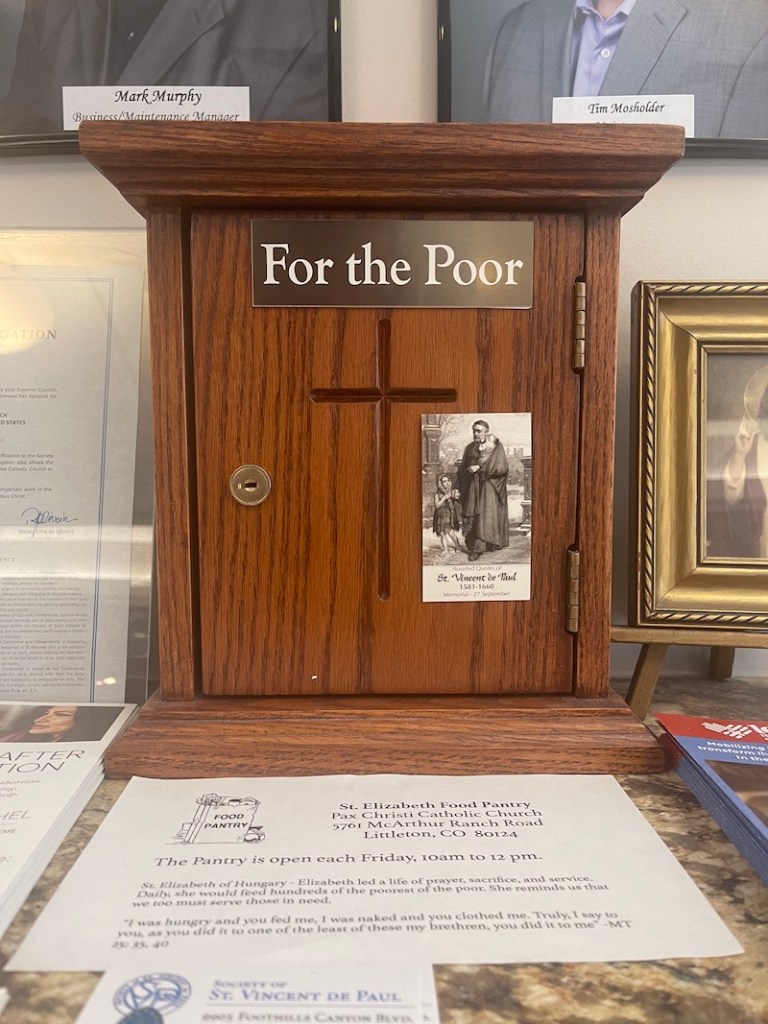
Almsgiving, or giving to the poor, is the act of providing material goods for those in need. The word alms is derived from a Greek word for mercy or pity. We may think of almsgiving in terms of giving money directly to a poor person, but today there are many ways to give alms, often through an organization dedicated to this purpose, like the Society of St. Vincent de Paul or a local soup kitchen. During Lent, people will sometimes combine fasting with almsgiving. For example, if they regularly purchase a specialty coffee during the week, they might choose to fast from coffee and instead donate that money. If you’re looking for a way to begin almsgiving, consider simply placing cash in the St. Vincent de Paul poor box in the narthex after Mass.
What the Church proposes during Lent is not meant to be burdensome, but it may be a bit uncomfortable. It is the spiritual “diet” the Lord can use to purify our minds and hearts and get us in shape to love and serve Him more completely. As Pope Leo XIV put it in his Angelus address for the first Sunday of Lent: “By means of prayer, fasting, and almsgiving, we can renew our cooperation with the Lord in the crafting of our lives as a unique masterpiece.”1
1. Pope Leo XIV, Angelus address Feb. 22, 2026, quoted in Vatican News (www.vaticannews.va).
-
How to Observe Lent

Q: What exactly should I do during Lent?
Lent is a time of prayer and reflection—a special opportunity the Church provides to help us detach ourselves from the preoccupations of the world and reorient our lives toward Christ.
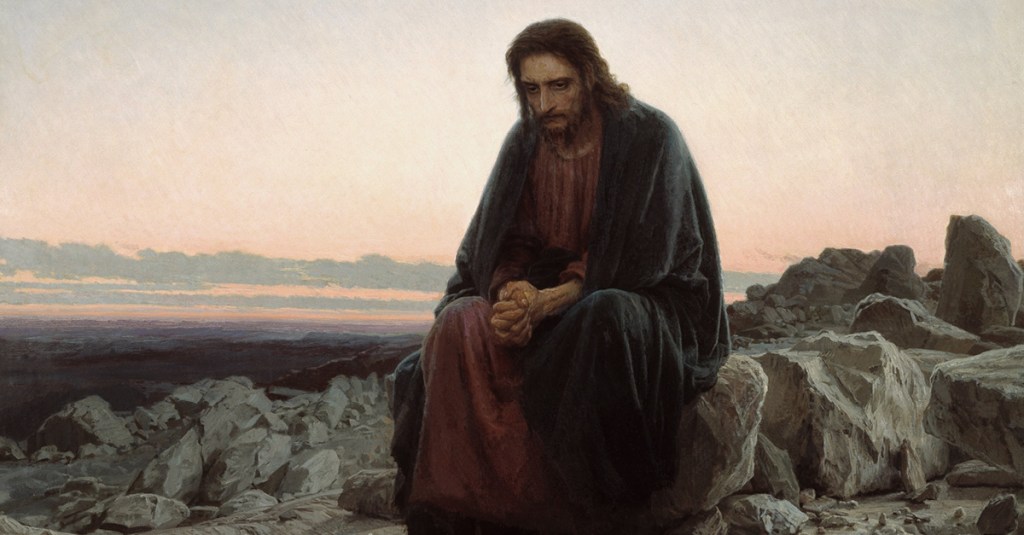
The 40 days from Ash Wednesday to Easter (not including Sundays) mirror Jesus’ 40 days of prayer and fasting in the wilderness. As Jesus emerged from His 40 days of prayer and fasting ready to begin his public ministry, we leave the Lenten season renewed and ready to live a life of love and service for God and others.
The Church proposes three areas to focus on during this season, known as the Three Pillars of Lent: prayer, fasting, and almsgiving (giving to the poor). The Bible presents all three of these as important elements of the Christian life. Jesus specifically lists all three in the Sermon on the Mount in Matthew 6:2–16. When you read this passage, notice that Jesus doesn’t say, “IF you, pray, fast, and give alms do thus-and-so,” but “WHEN you pray, fast, etc.” He assumes His followers will do these things. Of course, prayer, fasting, and almsgiving should be staples of our daily lives all year long, but over time it’s all too easy to become distracted or complacent. Lent is the perfect time to refocus our attention on what’s important. If we want to be Jesus’ disciples, we must do as He did.
So, how should you go about your Lenten observance? The Church lays out certain fasting requirements for Catholics; other than that, you are free to choose the practices you believe will be most helpful. You might consider choosing one practice from each of the three Pillars to maintain a balanced and fruitful Lenten experience. They should challenge you but should also be simple enough to sustain for six weeks without getting discouraged. For example, you might choose to engage in 15 minutes of silent prayer each day, give up your favorite specialty coffee, and place the money you save from that into the poor box. This is just one example. There is no wrong answer here, as long as you’re motivated by love.
We pray you will encounter the Lord in a new way this Lenten season. If you are new to the observance of Lent, or are just looking for some fresh ideas, there are many resources online, including this link to the US bishops’ website. Another good resource is the daily devotional In Conversation with God(Vol. 2 for Lent and Easter), available from Scepter Press.
May God bless you on your journey toward Easter!
-
Homily for the 5th Sunday in Ordinary Time
“Marriage: the Light of the World”
Homily by Fr. Greg Bierbaum, pastor -
What is “Ordinary Time?”
Q: What do we mean by “Ordinary Time?”
After the Solemnity of the Baptism of the Lord last Sunday, we left the Christmas season behind and once again entered what the Church calls Ordinary Time. But what does that mean?
Ordinary Time is the period on the Church calendar outside of Advent, Christmas, Lent, and Easter. It is broken into two blocks: the days between Christmas and Lent, and the days between Easter and Advent. Before the 1969 reforms, these periods were called Time after Epiphany and Time after Pentecost, respectively (in some traditions, time was counted after Trinity Sunday). For various reasons—including the complexity of the older calendar—the Church opted to combine these periods under a single heading.Here, we might note that the term “Ordinary Time” does not appear in the Latin typical editions of the liturgical books. The original term used is Tempus per Annum, or “time through the year.” Even the first vernacular edition labeled the period “Season of the Year.” In fact, it’s not entirely clear how “Ordinary Time” came to be used. 1
Today, we tend to define “ordinary” as meaning “plain” or “dull,” but this is not what the Church intends. Rather, “ordinary” here means “as expected” or “customary,” as opposed to “extraordinary.” The Sundays and weekdays of Ordinary Time are not marked by a focus on a single aspect of Christ’s life but are meant to encompass the whole mystery of His life. We are no longer in an extraordinary season of fasting or celebration, but have returned to our regular spiritual rhythms.²
So while we may miss the joy and festivity of the Christmas season, we are reminded that in our daily walk with Christ there need be no dull moments. He longs to meet us every day of the year.
Endnotes:
- Michael P. Foley, “The Mysterious Meaning of Ordinary Time,” New Liturgical Movement, February 20, 2020.
https://www.newliturgicalmovement.org/2020/02/the-mysterious-meaning-of-ordinary-time.html - Catholic Culture, “Our Ordinary Walk of Life: Understanding Tempus per Annum.”
https://www.catholicculture.org/commentary/our-ordinary-walk-life-understanding-tempus-per-annum/
- Michael P. Foley, “The Mysterious Meaning of Ordinary Time,” New Liturgical Movement, February 20, 2020.
-
Homily for the Baptism of the Lord
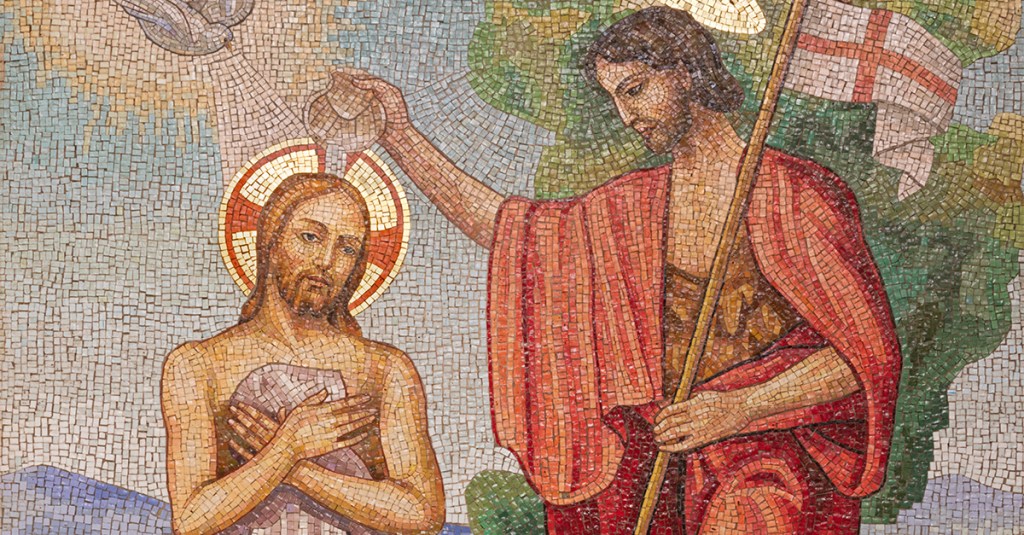
“Because I’m God, and You’re Not… and I Love You!”
Homily for the Solemnity of the Baptism of the Lord, by Fr. Greg Bierbaum. -
Liturgy Notes: Does It Matter What We Sing at Mass?
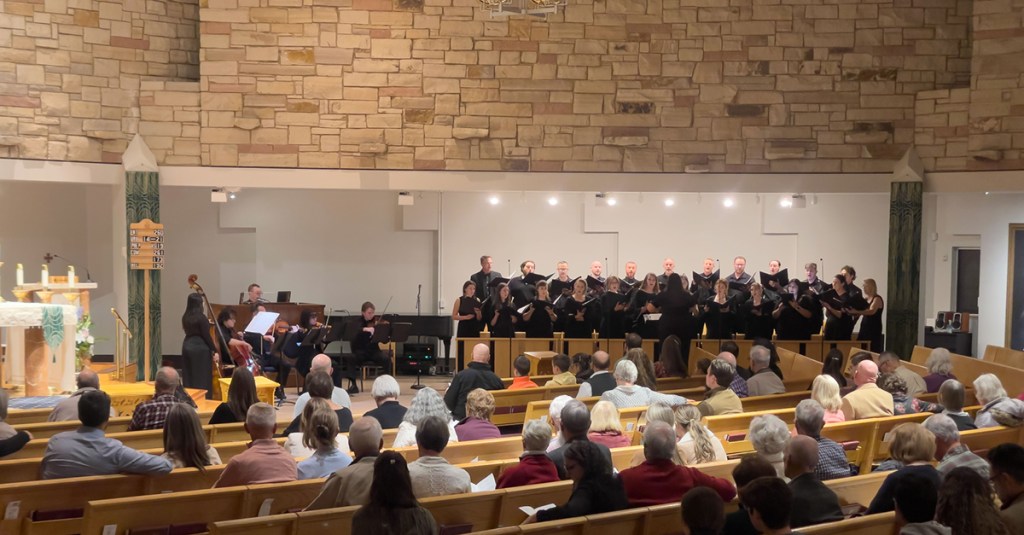
Music is central to the celebration of Mass. Now, there are many forms of music, and no doubt you’ve heard various types of music at Mass. But is there any musical form that we can say is more fitting for Mass than others?
It turns out that, as with the use of Latin, the Church offers guidance for choosing music for Mass. “The Church acknowledges Gregorian chant as specially suited to the Roman liturgy: therefore, other things being equal, it should be given pride of place in liturgical services” (Sacrosanctum concilium, section 116). In light of this, we incorporate Gregorian chant into our liturgies at St. Mark, especially in the Ordinary of the Mass (Kyrie, Gloria, Sanctus, Agnus Dei).
Is this the only music we can use? No it’s not, but in the same section, the Council goes on to say, “But other kinds of sacred music, especially polyphony, are by no means excluded from liturgical celebrations, so long as they accord with the spirit of the liturgical action…” So, while there is room for individual judgment on selecting music, it’s clear the Council did not intend for just any musical form to be employed for the Holy Sacrifice. The Church has determined that Gregorian chant, polyphony, and other forms of music that share that same general spirit are most fitting.
At St. Mark, we have gone to great lengths to develop a beautiful sacred music program that fulfills the Church’s guidance, moves and inspires our congregation, and most importantly, gives the greatest glory to God. If you would like to learn more about how you can be part of this special ministry, please contact Director of Sacred Music Diana Corliss at dianac@stmarkhr.org, or visit stmarkhr.org/ministry/sacred-music.
-
Homily for the Epiphany of the Lord
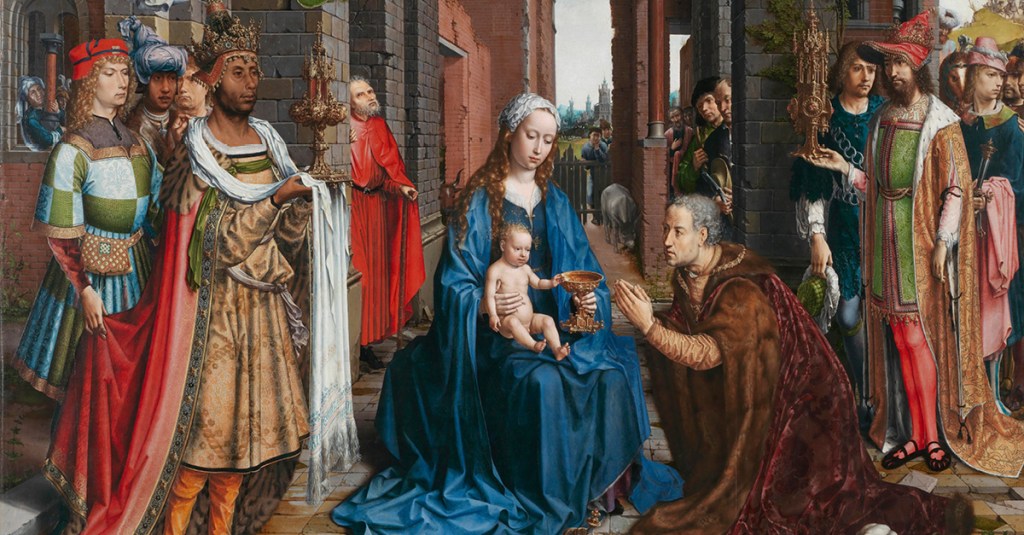
“The Star… and the Stars.” Fr. Greg Bierbaum (1/4/26)
-
Homily for the Nativity of the Lord
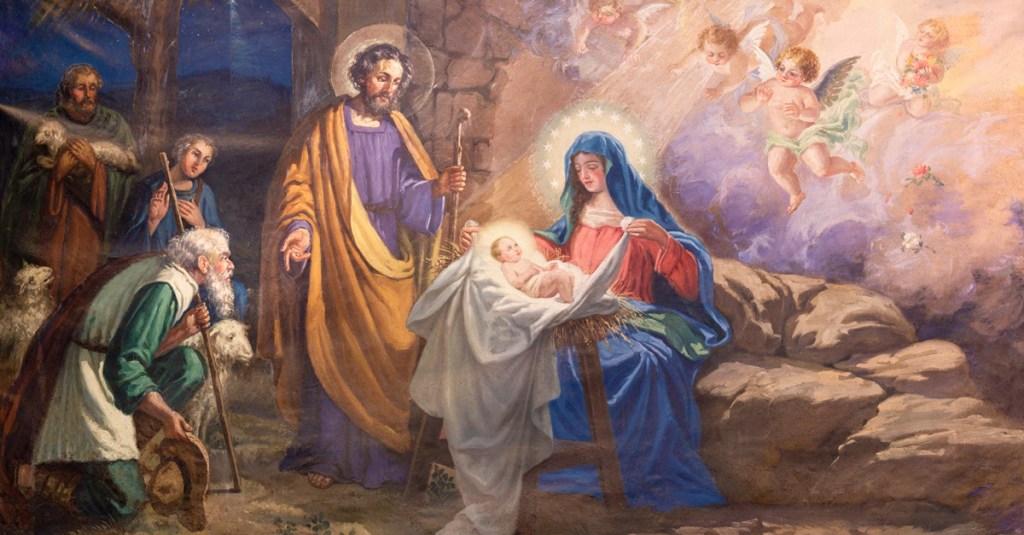
Fr. Greg Bierbaum (12/25/25)
-
Homily for the 4th Sunday of Advent

Fr. Greg Bierbaum (12/21/25)
-
What’s the Origin of the Advent Wreath?
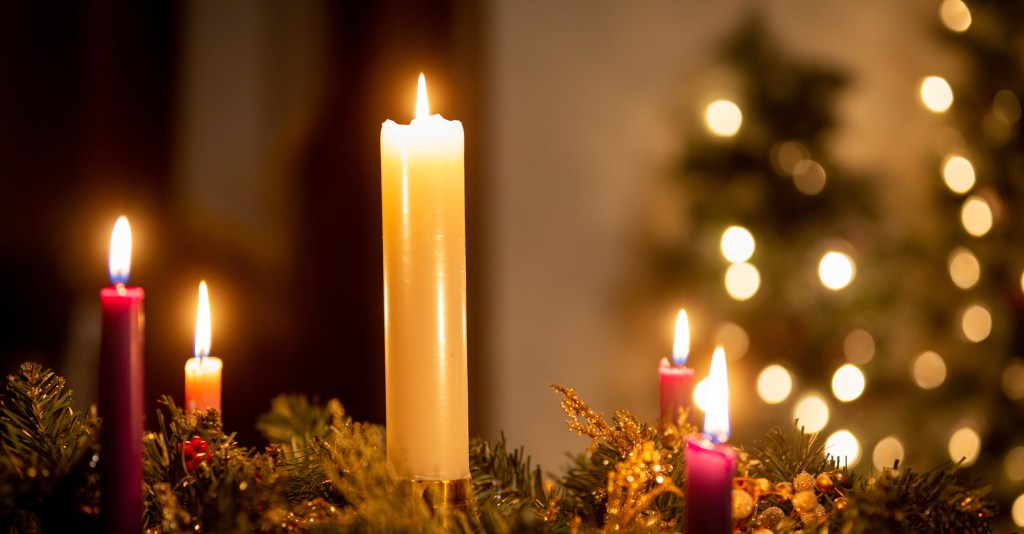
Q: What’s the origin of the Advent wreath?
In many churches and homes, the start of the Advent season is marked by the appearance of the familiar evergreen wreath and four candles. Lighting the candles as the weeks of Advent progress—one candle the first week, two the second, and so on—is a cherished tradition for many Western Christians, often accompanied by prayers, Scripture reading, and hymn-singing. But where did this custom originate?
The precise origin of the Advent wreath is uncertain. Some believe it began in pre-Christian Europe, where people lit candles as a sign of warmth and light during the dark and cold month of December. The candles may also have symbolized hope in the eventual return of spring. According to some accounts, Christian missionaries later used this custom as a way to teach pagan peoples about Christ, the true light who enters a darkened world to bring salvation.
It was not until the 16th century in Germany that we find evidence of a candle-lighting custom being explicitly linked to the Church’s season of Advent. Some sources suggest that Lutherans developed the practice of lighting candles to mark the time until Christmas, while others note that a similar tradition could already be found among both Lutherans and Catholics.
What is more certain is that the Advent wreath as we know it today did not take shape until the 19th century. German theologian and educator Johann Hinrich Wichern (1808–1881) is generally credited with devising the pattern of lighting an increasing number of candles to count down the days until Christmas. The number and color of the candles developed over time—and even today vary among Western Christian communities. In any case, the basic practice caught on among Catholics and Protestants alike and soon spread throughout Europe and North America.
If you’ve never brought this tradition into your home, it’s not too late to start. The Advent wreath brings together so many important elements: prayer, Scripture, hymn-singing, catechesis on the Incarnation, and the simple beauty and mystery of candlelight. It’s a wonderful place to begin praying together as a family, and it leaves children with fond memories and a lovely tradition they will be eager to pass on to their own families.
Home
1–2 minutes

