

Last week, we looked at how the Church proposes the three “pillars of Lent” to shape our observance of this holy season. This week, we will examine each pillar more closely and consider simple ways we can incorporate them into our daily routine.
Prayer is simply talking with God. There are many ways to pray in our Catholic tradition, but they all come down to one thing: communing in our hearts and minds with the Lord who loves us and longs to spend time with us. Of course, the Holy Sacrifice of the Mass is the supreme for prayer for the Christian, but personal one-on-one time with the Lord is also vital. If you have not established a daily prayer routine of some kind, Lent is a great time to begin. If you are unsure of where to start, you might simply set aside some time each day—say, 15 minutes—to just sit and talk to the Lord in the quiet of your mind. Or you might choose something more structured, like the Rosary or the Liturgy of the Hours, which also make excellent practices for the whole family. You don’t make it too complicated; just start praying.
Fasting is the practice most associated with Lent, but it’s not always well-understood. Put simply, fasting is giving up something good for the sake of something better, namely a closer relationship with Jesus. We usually think of fasting in terms of food, but it can also involve other areas. In our modern lives, there are so many things that claim our attention and our affections: food, money, alcohol, pleasure, the internet, and so on. Fasting offers an effective way to lessen our dependence on worldly goods so that the Lord can take first place in our lives. If there is something in your life that you feel you can’t live without, where the thought of cutting back makes you distinctly uncomfortable, that might be the very thing you need to surrender to God through fasting!
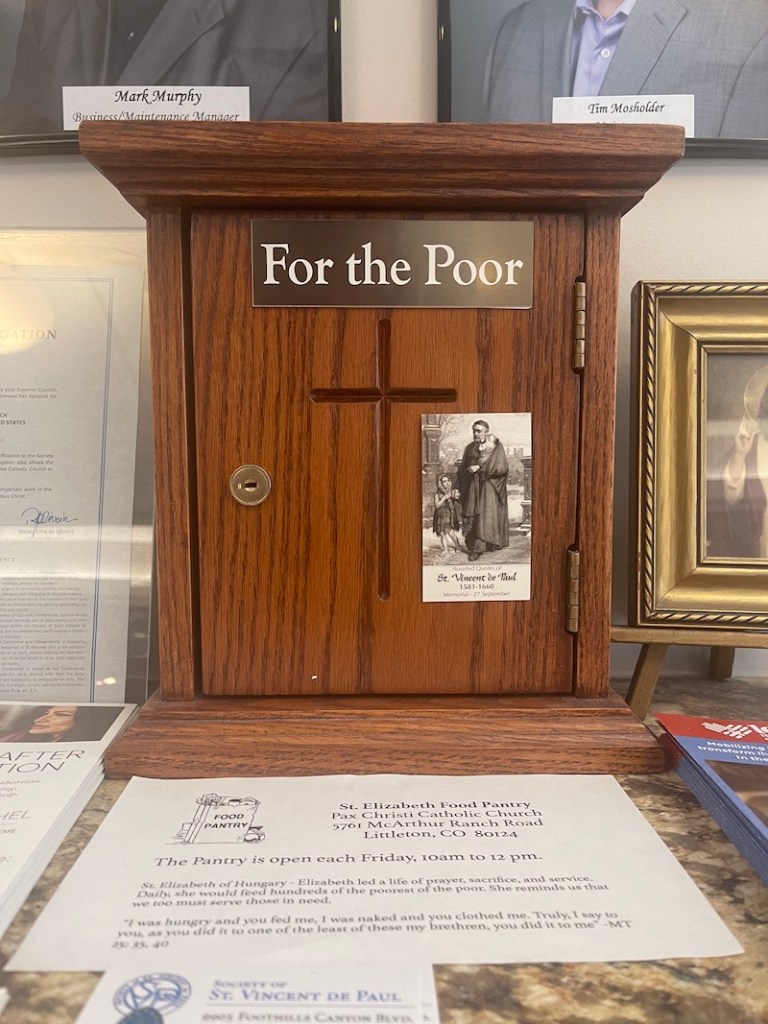
Almsgiving, or giving to the poor, is the act of providing material goods for those in need. The word alms is derived from a Greek word for mercy or pity. We may think of almsgiving in terms of giving money directly to a poor person, but today there are many ways to give alms, often through an organization dedicated to this purpose, like the Society of St. Vincent de Paul or a local soup kitchen. During Lent, people will sometimes combine fasting with almsgiving. For example, if they regularly purchase a specialty coffee during the week, they might choose to fast from coffee and instead donate that money. If you’re looking for a way to begin almsgiving, consider simply placing cash in the St. Vincent de Paul poor box in the narthex after Mass.
What the Church proposes during Lent is not meant to be burdensome, but it may be a bit uncomfortable. It is the spiritual “diet” the Lord can use to purify our minds and hearts and get us in shape to love and serve Him more completely. As Pope Leo XIV put it in his Angelus address for the first Sunday of Lent: “By means of prayer, fasting, and almsgiving, we can renew our cooperation with the Lord in the crafting of our lives as a unique masterpiece.”1
1. Pope Leo XIV, Angelus address Feb. 22, 2026, quoted in Vatican News (www.vaticannews.va).



Leave a Reply